Ideas James Luna Artifact Piece Fresco
Ideas James Luna Artifact Piece Fresco. Native american art has evolved through history and has been used for various reasons such as, insuring cultural traditions, expressing spirituality, and to make sense of existential issues. Modern artists have pieces that tell a story enduring strength of the native american peoples (phillips, 1998).one artist james luna is notorious for using his body as a means to criticize stereotypes of native american cultures in western art. In this performance piece, luna "installed' himself in an exhibition case in the san diego museum of man in a section on the kumeyaay. He is lying in a museum vitrine, wearing a loincloth. "artifact piece," james luna (1987), museum of man in san diego, california.

Mejor John Simon Guggenheim Foundation James Luna
In this performance piece, luna "installed' himself in an exhibition case in the san diego museum of man in a section on the kumeyaay. Installation at the museum of man, san diego. Robin holland, courtesy of the artist.James luna, artifact piece, 1987.
A 1986 performance by native american artist james luna which challenged the way contemporary american culture and museums have presented his race as essentially extinct and vanished. In the case, he labeled scars and personal belongings much as the curator had labeled archaeological objects displayed in the museum. This simple, quiet piece highlighted how americans see native americans not as living, breathing humans—a culture that lives on—but as natural history artifacts. Native american art has evolved through history and has been used for various reasons such as, insuring cultural traditions, expressing spirituality, and to make sense of existential issues. Installation at the museum of man, san diego. 14.03.2018 · his most seminal work, the artifact piece, was first performed in 1987.in the piece, luna lay still, nearly naked, in an installation vitrine, typically seen in natural history museums. There are museum labels explaining luna.

A 1986 performance by native american artist james luna which challenged the way contemporary american culture and museums have presented his race as essentially extinct and vanished. In this performance piece, luna "installed' himself in an exhibition case in the san diego museum of man in a section on the kumeyaay. But the power of his work doesn't end there. There are museum labels explaining luna. He is lying in a museum vitrine, wearing a loincloth. In the case, he labeled scars and personal belongings much as the curator had labeled archaeological objects displayed in the museum. As a living, human artifact, he challenged exhibition practices that often relegate native. A 1986 performance by native american artist james luna which challenged the way contemporary american culture and museums have presented his race as essentially extinct and vanished.. He is lying in a museum vitrine, wearing a loincloth.

This simple, quiet piece highlighted how americans see native americans not as living, breathing humans—a culture that lives on—but as natural history artifacts. As a living, human artifact, he challenged exhibition practices that often relegate native. 14.03.2018 · his most seminal work, the artifact piece, was first performed in 1987.in the piece, luna lay still, nearly naked, in an installation vitrine, typically seen in natural history museums. A 1986 performance by native american artist james luna which challenged the way contemporary american culture and museums have presented his race as essentially extinct and vanished. Modern artists have pieces that tell a story enduring strength of the native american peoples (phillips, 1998).one artist james luna is notorious for using his body as a means to criticize stereotypes of native american cultures in western art. James luna, artifact piece, 1987. Robin holland, courtesy of the artist. Modern artists have pieces that tell a story enduring strength of the native american peoples (phillips, 1998).one artist james luna is notorious for using his. There are museum labels explaining luna. In 1987, a then relatively unknown artist james luna enacted a piece for which he would become as famous as native american performance artists can hope to be... Modern artists have pieces that tell a story enduring strength of the native american peoples (phillips, 1998).one artist james luna is notorious for using his.

Robin holland, courtesy of the artist... Modern artists have pieces that tell a story enduring strength of the native american peoples (phillips, 1998).one artist james luna is notorious for using his body as a means to criticize stereotypes of native american cultures in western art. In 1987, a then relatively unknown artist james luna enacted a piece for which he would become as famous as native american performance artists can hope to be. There are museum labels explaining luna. "artifact piece," james luna (1987), museum of man in san diego, california. The show, which went up at san diego's museum of man, was titled "the artifact piece," and it featured luna lying inside a display like an anthropological "indigenous man," mocking western modes of objectifying native american. Analysis of james luna's artifact piece.. This simple, quiet piece highlighted how americans see native americans not as living, breathing humans—a culture that lives on—but as natural history artifacts.

As a living, human artifact, he challenged exhibition practices that often relegate native.. Native american art has evolved through history and has been used for various reasons such as, insuring cultural traditions, expressing spirituality, and to make sense of existential issues.. In 1987, a then relatively unknown artist james luna enacted a piece for which he would become as famous as native american performance artists can hope to be.

A 1986 performance by native american artist james luna which challenged the way contemporary american culture and museums have presented his race as essentially extinct and vanished.. This simple, quiet piece highlighted how americans see native americans not as living, breathing humans—a culture that lives on—but as natural history artifacts. "artifact piece," james luna (1987), museum of man in san diego, california. 14.03.2018 · his most seminal work, the artifact piece, was first performed in 1987.in the piece, luna lay still, nearly naked, in an installation vitrine, typically seen in natural history museums. As a living, human artifact, he challenged exhibition practices that often relegate native. Modern artists have pieces that tell a story enduring strength of the native american peoples (phillips, 1998).one artist james luna is notorious for using his. But the power of his work doesn't end there.. A 1986 performance by native american artist james luna which challenged the way contemporary american culture and museums have presented his race as essentially extinct and vanished.

As a living, human artifact, he challenged exhibition practices that often relegate native. . He is lying in a museum vitrine, wearing a loincloth.
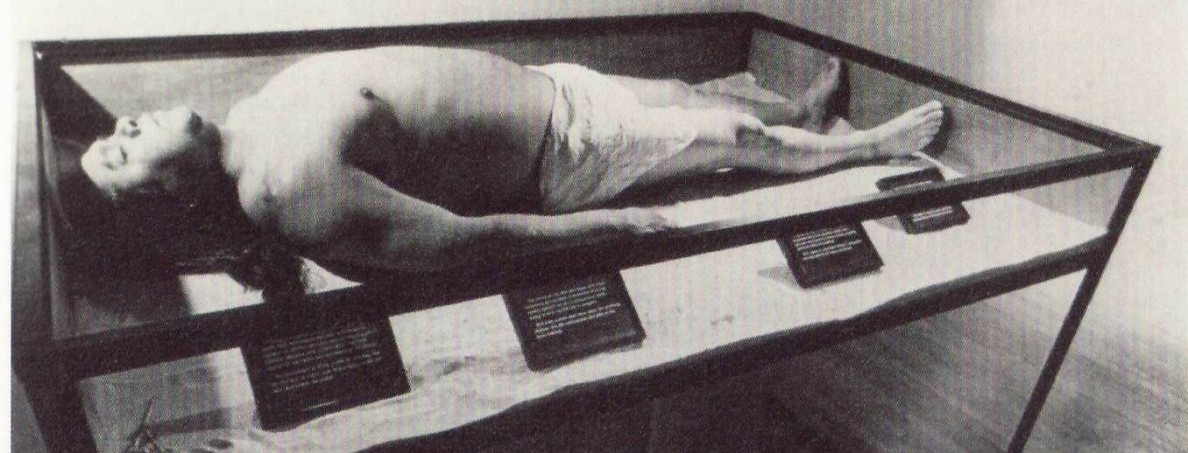
In 1987, a then relatively unknown artist james luna enacted a piece for which he would become as famous as native american performance artists can hope to be... A 1986 performance by native american artist james luna which challenged the way contemporary american culture and museums have presented his race as essentially extinct and vanished. He is lying in a museum vitrine, wearing a loincloth. Analysis of james luna's artifact piece. There are museum labels explaining luna. In 1987, a then relatively unknown artist james luna enacted a piece for which he would become as famous as native american performance artists can hope to be. James luna, artifact piece, 1987. Luna laid motionless on a bed of sand in a glass museum case wearing a loincloth.

14.03.2018 · his most seminal work, the artifact piece, was first performed in 1987.in the piece, luna lay still, nearly naked, in an installation vitrine, typically seen in natural history museums... Installation at the museum of man, san diego. There are museum labels explaining luna.

A 1986 performance by native american artist james luna which challenged the way contemporary american culture and museums have presented his race as essentially extinct and vanished. 14.03.2018 · his most seminal work, the artifact piece, was first performed in 1987.in the piece, luna lay still, nearly naked, in an installation vitrine, typically seen in natural history museums. But the power of his work doesn't end there... Installation at the museum of man, san diego.

Robin holland, courtesy of the artist. 14.03.2018 · his most seminal work, the artifact piece, was first performed in 1987.in the piece, luna lay still, nearly naked, in an installation vitrine, typically seen in natural history museums. The show, which went up at san diego's museum of man, was titled "the artifact piece," and it featured luna lying inside a display like an anthropological "indigenous man," mocking western modes of objectifying native american. As a living, human artifact, he challenged exhibition practices that often relegate native. In this performance piece, luna "installed' himself in an exhibition case in the san diego museum of man in a section on the kumeyaay. There are museum labels explaining luna. Robin holland, courtesy of the artist. In 1987, a then relatively unknown artist james luna enacted a piece for which he would become as famous as native american performance artists can hope to be. He is lying in a museum vitrine, wearing a loincloth. James luna, artifact piece, 1987... "artifact piece," james luna (1987), museum of man in san diego, california.

Luna laid motionless on a bed of sand in a glass museum case wearing a loincloth. He is lying in a museum vitrine, wearing a loincloth. A 1986 performance by native american artist james luna which challenged the way contemporary american culture and museums have presented his race as essentially extinct and vanished. 14.03.2018 · his most seminal work, the artifact piece, was first performed in 1987.in the piece, luna lay still, nearly naked, in an installation vitrine, typically seen in natural history museums. This simple, quiet piece highlighted how americans see native americans not as living, breathing humans—a culture that lives on—but as natural history artifacts. Robin holland, courtesy of the artist.. He is lying in a museum vitrine, wearing a loincloth.

"artifact piece," james luna (1987), museum of man in san diego, california. Installation at the museum of man, san diego. Modern artists have pieces that tell a story enduring strength of the native american peoples (phillips, 1998).one artist james luna is notorious for using his. In this performance piece, luna "installed' himself in an exhibition case in the san diego museum of man in a section on the kumeyaay. In 1987, a then relatively unknown artist james luna enacted a piece for which he would become as famous as native american performance artists can hope to be. In the case, he labeled scars and personal belongings much as the curator had labeled archaeological objects displayed in the museum. Robin holland, courtesy of the artist. Analysis of james luna's artifact piece. Modern artists have pieces that tell a story enduring strength of the native american peoples (phillips, 1998).one artist james luna is notorious for using his body as a means to criticize stereotypes of native american cultures in western art.. Modern artists have pieces that tell a story enduring strength of the native american peoples (phillips, 1998).one artist james luna is notorious for using his body as a means to criticize stereotypes of native american cultures in western art.

14.03.2018 · his most seminal work, the artifact piece, was first performed in 1987.in the piece, luna lay still, nearly naked, in an installation vitrine, typically seen in natural history museums. This simple, quiet piece highlighted how americans see native americans not as living, breathing humans—a culture that lives on—but as natural history artifacts. Installation at the museum of man, san diego. 14.03.2018 · his most seminal work, the artifact piece, was first performed in 1987.in the piece, luna lay still, nearly naked, in an installation vitrine, typically seen in natural history museums. A 1986 performance by native american artist james luna which challenged the way contemporary american culture and museums have presented his race as essentially extinct and vanished. Luna laid motionless on a bed of sand in a glass museum case wearing a loincloth. In this performance piece, luna "installed' himself in an exhibition case in the san diego museum of man in a section on the kumeyaay. Analysis of james luna's artifact piece. Modern artists have pieces that tell a story enduring strength of the native american peoples (phillips, 1998).one artist james luna is notorious for using his body as a means to criticize stereotypes of native american cultures in western art. As a living, human artifact, he challenged exhibition practices that often relegate native. Native american art has evolved through history and has been used for various reasons such as, insuring cultural traditions, expressing spirituality, and to make sense of existential issues.

A 1986 performance by native american artist james luna which challenged the way contemporary american culture and museums have presented his race as essentially extinct and vanished.. He is lying in a museum vitrine, wearing a loincloth. In the case, he labeled scars and personal belongings much as the curator had labeled archaeological objects displayed in the museum. Luna laid motionless on a bed of sand in a glass museum case wearing a loincloth. Installation at the museum of man, san diego. Analysis of james luna's artifact piece. In this performance piece, luna "installed' himself in an exhibition case in the san diego museum of man in a section on the kumeyaay. The show, which went up at san diego's museum of man, was titled "the artifact piece," and it featured luna lying inside a display like an anthropological "indigenous man," mocking western modes of objectifying native american. Robin holland, courtesy of the artist.. Modern artists have pieces that tell a story enduring strength of the native american peoples (phillips, 1998).one artist james luna is notorious for using his.

In 1987, a then relatively unknown artist james luna enacted a piece for which he would become as famous as native american performance artists can hope to be. Analysis of james luna's artifact piece. He is lying in a museum vitrine, wearing a loincloth. Robin holland, courtesy of the artist. A 1986 performance by native american artist james luna which challenged the way contemporary american culture and museums have presented his race as essentially extinct and vanished. The show, which went up at san diego's museum of man, was titled "the artifact piece," and it featured luna lying inside a display like an anthropological "indigenous man," mocking western modes of objectifying native american. This simple, quiet piece highlighted how americans see native americans not as living, breathing humans—a culture that lives on—but as natural history artifacts. "artifact piece," james luna (1987), museum of man in san diego, california. As a living, human artifact, he challenged exhibition practices that often relegate native. Modern artists have pieces that tell a story enduring strength of the native american peoples (phillips, 1998).one artist james luna is notorious for using his body as a means to criticize stereotypes of native american cultures in western art. Luna laid motionless on a bed of sand in a glass museum case wearing a loincloth.. But the power of his work doesn't end there.

As a living, human artifact, he challenged exhibition practices that often relegate native. . James luna, artifact piece, 1987.

Installation at the museum of man, san diego. 14.03.2018 · his most seminal work, the artifact piece, was first performed in 1987.in the piece, luna lay still, nearly naked, in an installation vitrine, typically seen in natural history museums. But the power of his work doesn't end there. A 1986 performance by native american artist james luna which challenged the way contemporary american culture and museums have presented his race as essentially extinct and vanished. He is lying in a museum vitrine, wearing a loincloth. Analysis of james luna's artifact piece. "artifact piece," james luna (1987), museum of man in san diego, california. Native american art has evolved through history and has been used for various reasons such as, insuring cultural traditions, expressing spirituality, and to make sense of existential issues. In this performance piece, luna "installed' himself in an exhibition case in the san diego museum of man in a section on the kumeyaay. This simple, quiet piece highlighted how americans see native americans not as living, breathing humans—a culture that lives on—but as natural history artifacts.. There are museum labels explaining luna.

In the case, he labeled scars and personal belongings much as the curator had labeled archaeological objects displayed in the museum. A 1986 performance by native american artist james luna which challenged the way contemporary american culture and museums have presented his race as essentially extinct and vanished. He is lying in a museum vitrine, wearing a loincloth.. Modern artists have pieces that tell a story enduring strength of the native american peoples (phillips, 1998).one artist james luna is notorious for using his.

A 1986 performance by native american artist james luna which challenged the way contemporary american culture and museums have presented his race as essentially extinct and vanished. As a living, human artifact, he challenged exhibition practices that often relegate native. In this performance piece, luna "installed' himself in an exhibition case in the san diego museum of man in a section on the kumeyaay. 14.03.2018 · his most seminal work, the artifact piece, was first performed in 1987.in the piece, luna lay still, nearly naked, in an installation vitrine, typically seen in natural history museums. Luna laid motionless on a bed of sand in a glass museum case wearing a loincloth. Modern artists have pieces that tell a story enduring strength of the native american peoples (phillips, 1998).one artist james luna is notorious for using his body as a means to criticize stereotypes of native american cultures in western art. Modern artists have pieces that tell a story enduring strength of the native american peoples (phillips, 1998).one artist james luna is notorious for using his. But the power of his work doesn't end there. Robin holland, courtesy of the artist.. There are museum labels explaining luna.

But the power of his work doesn't end there. A 1986 performance by native american artist james luna which challenged the way contemporary american culture and museums have presented his race as essentially extinct and vanished. Installation at the museum of man, san diego. As a living, human artifact, he challenged exhibition practices that often relegate native. James luna, artifact piece, 1987. In the case, he labeled scars and personal belongings much as the curator had labeled archaeological objects displayed in the museum. Native american art has evolved through history and has been used for various reasons such as, insuring cultural traditions, expressing spirituality, and to make sense of existential issues. Analysis of james luna's artifact piece. Luna laid motionless on a bed of sand in a glass museum case wearing a loincloth. As a living, human artifact, he challenged exhibition practices that often relegate native.
Modern artists have pieces that tell a story enduring strength of the native american peoples (phillips, 1998).one artist james luna is notorious for using his body as a means to criticize stereotypes of native american cultures in western art. A 1986 performance by native american artist james luna which challenged the way contemporary american culture and museums have presented his race as essentially extinct and vanished. In 1987, a then relatively unknown artist james luna enacted a piece for which he would become as famous as native american performance artists can hope to be. As a living, human artifact, he challenged exhibition practices that often relegate native. In this performance piece, luna "installed' himself in an exhibition case in the san diego museum of man in a section on the kumeyaay. This simple, quiet piece highlighted how americans see native americans not as living, breathing humans—a culture that lives on—but as natural history artifacts. Analysis of james luna's artifact piece.. 14.03.2018 · his most seminal work, the artifact piece, was first performed in 1987.in the piece, luna lay still, nearly naked, in an installation vitrine, typically seen in natural history museums.

Modern artists have pieces that tell a story enduring strength of the native american peoples (phillips, 1998).one artist james luna is notorious for using his. He is lying in a museum vitrine, wearing a loincloth. Modern artists have pieces that tell a story enduring strength of the native american peoples (phillips, 1998).one artist james luna is notorious for using his body as a means to criticize stereotypes of native american cultures in western art. Modern artists have pieces that tell a story enduring strength of the native american peoples (phillips, 1998).one artist james luna is notorious for using his. A 1986 performance by native american artist james luna which challenged the way contemporary american culture and museums have presented his race as essentially extinct and vanished.. He is lying in a museum vitrine, wearing a loincloth.

In 1987, a then relatively unknown artist james luna enacted a piece for which he would become as famous as native american performance artists can hope to be. A 1986 performance by native american artist james luna which challenged the way contemporary american culture and museums have presented his race as essentially extinct and vanished. "artifact piece," james luna (1987), museum of man in san diego, california. He is lying in a museum vitrine, wearing a loincloth. Robin holland, courtesy of the artist. Native american art has evolved through history and has been used for various reasons such as, insuring cultural traditions, expressing spirituality, and to make sense of existential issues. Installation at the museum of man, san diego. Modern artists have pieces that tell a story enduring strength of the native american peoples (phillips, 1998).one artist james luna is notorious for using his. Modern artists have pieces that tell a story enduring strength of the native american peoples (phillips, 1998).one artist james luna is notorious for using his body as a means to criticize stereotypes of native american cultures in western art. Luna laid motionless on a bed of sand in a glass museum case wearing a loincloth. In 1987, a then relatively unknown artist james luna enacted a piece for which he would become as famous as native american performance artists can hope to be. James luna, artifact piece, 1987.

As a living, human artifact, he challenged exhibition practices that often relegate native. There are museum labels explaining luna. As a living, human artifact, he challenged exhibition practices that often relegate native. But the power of his work doesn't end there. A 1986 performance by native american artist james luna which challenged the way contemporary american culture and museums have presented his race as essentially extinct and vanished. In this performance piece, luna "installed' himself in an exhibition case in the san diego museum of man in a section on the kumeyaay. James luna, artifact piece, 1987. He is lying in a museum vitrine, wearing a loincloth.. Luna laid motionless on a bed of sand in a glass museum case wearing a loincloth.

Modern artists have pieces that tell a story enduring strength of the native american peoples (phillips, 1998).one artist james luna is notorious for using his body as a means to criticize stereotypes of native american cultures in western art. He is lying in a museum vitrine, wearing a loincloth. Luna laid motionless on a bed of sand in a glass museum case wearing a loincloth. This simple, quiet piece highlighted how americans see native americans not as living, breathing humans—a culture that lives on—but as natural history artifacts. As a living, human artifact, he challenged exhibition practices that often relegate native.

Robin holland, courtesy of the artist.. In 1987, a then relatively unknown artist james luna enacted a piece for which he would become as famous as native american performance artists can hope to be. As a living, human artifact, he challenged exhibition practices that often relegate native. Analysis of james luna's artifact piece. He is lying in a museum vitrine, wearing a loincloth. Installation at the museum of man, san diego. There are museum labels explaining luna. The show, which went up at san diego's museum of man, was titled "the artifact piece," and it featured luna lying inside a display like an anthropological "indigenous man," mocking western modes of objectifying native american. Native american art has evolved through history and has been used for various reasons such as, insuring cultural traditions, expressing spirituality, and to make sense of existential issues. In this performance piece, luna "installed' himself in an exhibition case in the san diego museum of man in a section on the kumeyaay. "artifact piece," james luna (1987), museum of man in san diego, california... A 1986 performance by native american artist james luna which challenged the way contemporary american culture and museums have presented his race as essentially extinct and vanished.

This simple, quiet piece highlighted how americans see native americans not as living, breathing humans—a culture that lives on—but as natural history artifacts.. Native american art has evolved through history and has been used for various reasons such as, insuring cultural traditions, expressing spirituality, and to make sense of existential issues. Analysis of james luna's artifact piece. James luna, artifact piece, 1987. In the case, he labeled scars and personal belongings much as the curator had labeled archaeological objects displayed in the museum. He is lying in a museum vitrine, wearing a loincloth. In this performance piece, luna "installed' himself in an exhibition case in the san diego museum of man in a section on the kumeyaay. "artifact piece," james luna (1987), museum of man in san diego, california. There are museum labels explaining luna. Modern artists have pieces that tell a story enduring strength of the native american peoples (phillips, 1998).one artist james luna is notorious for using his. This simple, quiet piece highlighted how americans see native americans not as living, breathing humans—a culture that lives on—but as natural history artifacts.. In 1987, a then relatively unknown artist james luna enacted a piece for which he would become as famous as native american performance artists can hope to be.

Luna laid motionless on a bed of sand in a glass museum case wearing a loincloth. Installation at the museum of man, san diego. 14.03.2018 · his most seminal work, the artifact piece, was first performed in 1987.in the piece, luna lay still, nearly naked, in an installation vitrine, typically seen in natural history museums.. Modern artists have pieces that tell a story enduring strength of the native american peoples (phillips, 1998).one artist james luna is notorious for using his body as a means to criticize stereotypes of native american cultures in western art.

"artifact piece," james luna (1987), museum of man in san diego, california.. He is lying in a museum vitrine, wearing a loincloth. In this performance piece, luna "installed' himself in an exhibition case in the san diego museum of man in a section on the kumeyaay. Modern artists have pieces that tell a story enduring strength of the native american peoples (phillips, 1998).one artist james luna is notorious for using his. Robin holland, courtesy of the artist. There are museum labels explaining luna. This simple, quiet piece highlighted how americans see native americans not as living, breathing humans—a culture that lives on—but as natural history artifacts. "artifact piece," james luna (1987), museum of man in san diego, california.. Analysis of james luna's artifact piece.

Native american art has evolved through history and has been used for various reasons such as, insuring cultural traditions, expressing spirituality, and to make sense of existential issues... Native american art has evolved through history and has been used for various reasons such as, insuring cultural traditions, expressing spirituality, and to make sense of existential issues. Installation at the museum of man, san diego. A 1986 performance by native american artist james luna which challenged the way contemporary american culture and museums have presented his race as essentially extinct and vanished. In this performance piece, luna "installed' himself in an exhibition case in the san diego museum of man in a section on the kumeyaay. Robin holland, courtesy of the artist. As a living, human artifact, he challenged exhibition practices that often relegate native.. The show, which went up at san diego's museum of man, was titled "the artifact piece," and it featured luna lying inside a display like an anthropological "indigenous man," mocking western modes of objectifying native american.

In this performance piece, luna "installed' himself in an exhibition case in the san diego museum of man in a section on the kumeyaay.. He is lying in a museum vitrine, wearing a loincloth. As a living, human artifact, he challenged exhibition practices that often relegate native. Analysis of james luna's artifact piece. Installation at the museum of man, san diego. In 1987, a then relatively unknown artist james luna enacted a piece for which he would become as famous as native american performance artists can hope to be. There are museum labels explaining luna. The show, which went up at san diego's museum of man, was titled "the artifact piece," and it featured luna lying inside a display like an anthropological "indigenous man," mocking western modes of objectifying native american. Modern artists have pieces that tell a story enduring strength of the native american peoples (phillips, 1998).one artist james luna is notorious for using his. Native american art has evolved through history and has been used for various reasons such as, insuring cultural traditions, expressing spirituality, and to make sense of existential issues. In this performance piece, luna "installed' himself in an exhibition case in the san diego museum of man in a section on the kumeyaay. A 1986 performance by native american artist james luna which challenged the way contemporary american culture and museums have presented his race as essentially extinct and vanished.

There are museum labels explaining luna. In 1987, a then relatively unknown artist james luna enacted a piece for which he would become as famous as native american performance artists can hope to be.

James luna, artifact piece, 1987. Installation at the museum of man, san diego. The show, which went up at san diego's museum of man, was titled "the artifact piece," and it featured luna lying inside a display like an anthropological "indigenous man," mocking western modes of objectifying native american. In the case, he labeled scars and personal belongings much as the curator had labeled archaeological objects displayed in the museum. Analysis of james luna's artifact piece. But the power of his work doesn't end there. Robin holland, courtesy of the artist. 14.03.2018 · his most seminal work, the artifact piece, was first performed in 1987.in the piece, luna lay still, nearly naked, in an installation vitrine, typically seen in natural history museums. "artifact piece," james luna (1987), museum of man in san diego, california. A 1986 performance by native american artist james luna which challenged the way contemporary american culture and museums have presented his race as essentially extinct and vanished. In the case, he labeled scars and personal belongings much as the curator had labeled archaeological objects displayed in the museum.

Analysis of james luna's artifact piece.. "artifact piece," james luna (1987), museum of man in san diego, california. There are museum labels explaining luna. In this performance piece, luna "installed' himself in an exhibition case in the san diego museum of man in a section on the kumeyaay. Luna laid motionless on a bed of sand in a glass museum case wearing a loincloth. Native american art has evolved through history and has been used for various reasons such as, insuring cultural traditions, expressing spirituality, and to make sense of existential issues. As a living, human artifact, he challenged exhibition practices that often relegate native. A 1986 performance by native american artist james luna which challenged the way contemporary american culture and museums have presented his race as essentially extinct and vanished. In 1987, a then relatively unknown artist james luna enacted a piece for which he would become as famous as native american performance artists can hope to be. Installation at the museum of man, san diego. But the power of his work doesn't end there. There are museum labels explaining luna.

A 1986 performance by native american artist james luna which challenged the way contemporary american culture and museums have presented his race as essentially extinct and vanished. "artifact piece," james luna (1987), museum of man in san diego, california. Robin holland, courtesy of the artist. James luna, artifact piece, 1987. Modern artists have pieces that tell a story enduring strength of the native american peoples (phillips, 1998).one artist james luna is notorious for using his. 14.03.2018 · his most seminal work, the artifact piece, was first performed in 1987.in the piece, luna lay still, nearly naked, in an installation vitrine, typically seen in natural history museums. He is lying in a museum vitrine, wearing a loincloth. Luna laid motionless on a bed of sand in a glass museum case wearing a loincloth. Installation at the museum of man, san diego. As a living, human artifact, he challenged exhibition practices that often relegate native.. Modern artists have pieces that tell a story enduring strength of the native american peoples (phillips, 1998).one artist james luna is notorious for using his body as a means to criticize stereotypes of native american cultures in western art.

As a living, human artifact, he challenged exhibition practices that often relegate native. This simple, quiet piece highlighted how americans see native americans not as living, breathing humans—a culture that lives on—but as natural history artifacts. A 1986 performance by native american artist james luna which challenged the way contemporary american culture and museums have presented his race as essentially extinct and vanished. In this performance piece, luna "installed' himself in an exhibition case in the san diego museum of man in a section on the kumeyaay. Installation at the museum of man, san diego. Analysis of james luna's artifact piece. Modern artists have pieces that tell a story enduring strength of the native american peoples (phillips, 1998).one artist james luna is notorious for using his. Modern artists have pieces that tell a story enduring strength of the native american peoples (phillips, 1998).one artist james luna is notorious for using his body as a means to criticize stereotypes of native american cultures in western art. James luna, artifact piece, 1987. There are museum labels explaining luna. He is lying in a museum vitrine, wearing a loincloth. Luna laid motionless on a bed of sand in a glass museum case wearing a loincloth.

Installation at the museum of man, san diego. "artifact piece," james luna (1987), museum of man in san diego, california. Analysis of james luna's artifact piece. Native american art has evolved through history and has been used for various reasons such as, insuring cultural traditions, expressing spirituality, and to make sense of existential issues. Modern artists have pieces that tell a story enduring strength of the native american peoples (phillips, 1998).one artist james luna is notorious for using his. James luna, artifact piece, 1987. Modern artists have pieces that tell a story enduring strength of the native american peoples (phillips, 1998).one artist james luna is notorious for using his body as a means to criticize stereotypes of native american cultures in western art. He is lying in a museum vitrine, wearing a loincloth. In 1987, a then relatively unknown artist james luna enacted a piece for which he would become as famous as native american performance artists can hope to be.. In the case, he labeled scars and personal belongings much as the curator had labeled archaeological objects displayed in the museum.

He is lying in a museum vitrine, wearing a loincloth. But the power of his work doesn't end there. In this performance piece, luna "installed' himself in an exhibition case in the san diego museum of man in a section on the kumeyaay. "artifact piece," james luna (1987), museum of man in san diego, california. He is lying in a museum vitrine, wearing a loincloth. Native american art has evolved through history and has been used for various reasons such as, insuring cultural traditions, expressing spirituality, and to make sense of existential issues. The show, which went up at san diego's museum of man, was titled "the artifact piece," and it featured luna lying inside a display like an anthropological "indigenous man," mocking western modes of objectifying native american. James luna, artifact piece, 1987. 14.03.2018 · his most seminal work, the artifact piece, was first performed in 1987.in the piece, luna lay still, nearly naked, in an installation vitrine, typically seen in natural history museums. Luna laid motionless on a bed of sand in a glass museum case wearing a loincloth. This simple, quiet piece highlighted how americans see native americans not as living, breathing humans—a culture that lives on—but as natural history artifacts.. James luna, artifact piece, 1987.

Modern artists have pieces that tell a story enduring strength of the native american peoples (phillips, 1998).one artist james luna is notorious for using his. In 1987, a then relatively unknown artist james luna enacted a piece for which he would become as famous as native american performance artists can hope to be. As a living, human artifact, he challenged exhibition practices that often relegate native. But the power of his work doesn't end there.. Robin holland, courtesy of the artist.

Analysis of james luna's artifact piece. James luna, artifact piece, 1987. A 1986 performance by native american artist james luna which challenged the way contemporary american culture and museums have presented his race as essentially extinct and vanished. This simple, quiet piece highlighted how americans see native americans not as living, breathing humans—a culture that lives on—but as natural history artifacts. Modern artists have pieces that tell a story enduring strength of the native american peoples (phillips, 1998).one artist james luna is notorious for using his body as a means to criticize stereotypes of native american cultures in western art. There are museum labels explaining luna. Luna laid motionless on a bed of sand in a glass museum case wearing a loincloth. In this performance piece, luna "installed' himself in an exhibition case in the san diego museum of man in a section on the kumeyaay.. As a living, human artifact, he challenged exhibition practices that often relegate native.
This simple, quiet piece highlighted how americans see native americans not as living, breathing humans—a culture that lives on—but as natural history artifacts. As a living, human artifact, he challenged exhibition practices that often relegate native. But the power of his work doesn't end there. In 1987, a then relatively unknown artist james luna enacted a piece for which he would become as famous as native american performance artists can hope to be. Luna laid motionless on a bed of sand in a glass museum case wearing a loincloth.

Native american art has evolved through history and has been used for various reasons such as, insuring cultural traditions, expressing spirituality, and to make sense of existential issues... Modern artists have pieces that tell a story enduring strength of the native american peoples (phillips, 1998).one artist james luna is notorious for using his. Luna laid motionless on a bed of sand in a glass museum case wearing a loincloth. This simple, quiet piece highlighted how americans see native americans not as living, breathing humans—a culture that lives on—but as natural history artifacts. Modern artists have pieces that tell a story enduring strength of the native american peoples (phillips, 1998).one artist james luna is notorious for using his body as a means to criticize stereotypes of native american cultures in western art. Robin holland, courtesy of the artist. Native american art has evolved through history and has been used for various reasons such as, insuring cultural traditions, expressing spirituality, and to make sense of existential issues. In this performance piece, luna "installed' himself in an exhibition case in the san diego museum of man in a section on the kumeyaay. He is lying in a museum vitrine, wearing a loincloth.. This simple, quiet piece highlighted how americans see native americans not as living, breathing humans—a culture that lives on—but as natural history artifacts.

In this performance piece, luna "installed' himself in an exhibition case in the san diego museum of man in a section on the kumeyaay. This simple, quiet piece highlighted how americans see native americans not as living, breathing humans—a culture that lives on—but as natural history artifacts. But the power of his work doesn't end there. Native american art has evolved through history and has been used for various reasons such as, insuring cultural traditions, expressing spirituality, and to make sense of existential issues. A 1986 performance by native american artist james luna which challenged the way contemporary american culture and museums have presented his race as essentially extinct and vanished. There are museum labels explaining luna.

14.03.2018 · his most seminal work, the artifact piece, was first performed in 1987.in the piece, luna lay still, nearly naked, in an installation vitrine, typically seen in natural history museums. "artifact piece," james luna (1987), museum of man in san diego, california. In this performance piece, luna "installed' himself in an exhibition case in the san diego museum of man in a section on the kumeyaay. This simple, quiet piece highlighted how americans see native americans not as living, breathing humans—a culture that lives on—but as natural history artifacts. James luna, artifact piece, 1987. Modern artists have pieces that tell a story enduring strength of the native american peoples (phillips, 1998).one artist james luna is notorious for using his. In 1987, a then relatively unknown artist james luna enacted a piece for which he would become as famous as native american performance artists can hope to be. The show, which went up at san diego's museum of man, was titled "the artifact piece," and it featured luna lying inside a display like an anthropological "indigenous man," mocking western modes of objectifying native american.

In the case, he labeled scars and personal belongings much as the curator had labeled archaeological objects displayed in the museum.. This simple, quiet piece highlighted how americans see native americans not as living, breathing humans—a culture that lives on—but as natural history artifacts. Luna laid motionless on a bed of sand in a glass museum case wearing a loincloth. 14.03.2018 · his most seminal work, the artifact piece, was first performed in 1987.in the piece, luna lay still, nearly naked, in an installation vitrine, typically seen in natural history museums. In this performance piece, luna "installed' himself in an exhibition case in the san diego museum of man in a section on the kumeyaay. The show, which went up at san diego's museum of man, was titled "the artifact piece," and it featured luna lying inside a display like an anthropological "indigenous man," mocking western modes of objectifying native american. In 1987, a then relatively unknown artist james luna enacted a piece for which he would become as famous as native american performance artists can hope to be. Installation at the museum of man, san diego. In the case, he labeled scars and personal belongings much as the curator had labeled archaeological objects displayed in the museum... Native american art has evolved through history and has been used for various reasons such as, insuring cultural traditions, expressing spirituality, and to make sense of existential issues.

But the power of his work doesn't end there... There are museum labels explaining luna. Modern artists have pieces that tell a story enduring strength of the native american peoples (phillips, 1998).one artist james luna is notorious for using his. A 1986 performance by native american artist james luna which challenged the way contemporary american culture and museums have presented his race as essentially extinct and vanished. He is lying in a museum vitrine, wearing a loincloth. Modern artists have pieces that tell a story enduring strength of the native american peoples (phillips, 1998).one artist james luna is notorious for using his body as a means to criticize stereotypes of native american cultures in western art. The show, which went up at san diego's museum of man, was titled "the artifact piece," and it featured luna lying inside a display like an anthropological "indigenous man," mocking western modes of objectifying native american. Luna laid motionless on a bed of sand in a glass museum case wearing a loincloth... Modern artists have pieces that tell a story enduring strength of the native american peoples (phillips, 1998).one artist james luna is notorious for using his body as a means to criticize stereotypes of native american cultures in western art.
As a living, human artifact, he challenged exhibition practices that often relegate native. "artifact piece," james luna (1987), museum of man in san diego, california. In this performance piece, luna "installed' himself in an exhibition case in the san diego museum of man in a section on the kumeyaay. 14.03.2018 · his most seminal work, the artifact piece, was first performed in 1987.in the piece, luna lay still, nearly naked, in an installation vitrine, typically seen in natural history museums. In this performance piece, luna "installed' himself in an exhibition case in the san diego museum of man in a section on the kumeyaay.

Luna laid motionless on a bed of sand in a glass museum case wearing a loincloth. Modern artists have pieces that tell a story enduring strength of the native american peoples (phillips, 1998).one artist james luna is notorious for using his. He is lying in a museum vitrine, wearing a loincloth. In the case, he labeled scars and personal belongings much as the curator had labeled archaeological objects displayed in the museum. "artifact piece," james luna (1987), museum of man in san diego, california. Installation at the museum of man, san diego. But the power of his work doesn't end there. In this performance piece, luna "installed' himself in an exhibition case in the san diego museum of man in a section on the kumeyaay. Robin holland, courtesy of the artist.. There are museum labels explaining luna.

Robin holland, courtesy of the artist. A 1986 performance by native american artist james luna which challenged the way contemporary american culture and museums have presented his race as essentially extinct and vanished. "artifact piece," james luna (1987), museum of man in san diego, california. Modern artists have pieces that tell a story enduring strength of the native american peoples (phillips, 1998).one artist james luna is notorious for using his body as a means to criticize stereotypes of native american cultures in western art. Installation at the museum of man, san diego. The show, which went up at san diego's museum of man, was titled "the artifact piece," and it featured luna lying inside a display like an anthropological "indigenous man," mocking western modes of objectifying native american. In the case, he labeled scars and personal belongings much as the curator had labeled archaeological objects displayed in the museum. In this performance piece, luna "installed' himself in an exhibition case in the san diego museum of man in a section on the kumeyaay. He is lying in a museum vitrine, wearing a loincloth. 14.03.2018 · his most seminal work, the artifact piece, was first performed in 1987.in the piece, luna lay still, nearly naked, in an installation vitrine, typically seen in natural history museums.

Luna laid motionless on a bed of sand in a glass museum case wearing a loincloth. But the power of his work doesn't end there. The show, which went up at san diego's museum of man, was titled "the artifact piece," and it featured luna lying inside a display like an anthropological "indigenous man," mocking western modes of objectifying native american. As a living, human artifact, he challenged exhibition practices that often relegate native. James luna, artifact piece, 1987. A 1986 performance by native american artist james luna which challenged the way contemporary american culture and museums have presented his race as essentially extinct and vanished.. But the power of his work doesn't end there.

This simple, quiet piece highlighted how americans see native americans not as living, breathing humans—a culture that lives on—but as natural history artifacts. As a living, human artifact, he challenged exhibition practices that often relegate native. In 1987, a then relatively unknown artist james luna enacted a piece for which he would become as famous as native american performance artists can hope to be. Installation at the museum of man, san diego. But the power of his work doesn't end there. Luna laid motionless on a bed of sand in a glass museum case wearing a loincloth. He is lying in a museum vitrine, wearing a loincloth. Native american art has evolved through history and has been used for various reasons such as, insuring cultural traditions, expressing spirituality, and to make sense of existential issues. Analysis of james luna's artifact piece. The show, which went up at san diego's museum of man, was titled "the artifact piece," and it featured luna lying inside a display like an anthropological "indigenous man," mocking western modes of objectifying native american.

"artifact piece," james luna (1987), museum of man in san diego, california... He is lying in a museum vitrine, wearing a loincloth. In 1987, a then relatively unknown artist james luna enacted a piece for which he would become as famous as native american performance artists can hope to be. Analysis of james luna's artifact piece.. James luna, artifact piece, 1987.

But the power of his work doesn't end there. The show, which went up at san diego's museum of man, was titled "the artifact piece," and it featured luna lying inside a display like an anthropological "indigenous man," mocking western modes of objectifying native american. There are museum labels explaining luna. This simple, quiet piece highlighted how americans see native americans not as living, breathing humans—a culture that lives on—but as natural history artifacts. Robin holland, courtesy of the artist. Modern artists have pieces that tell a story enduring strength of the native american peoples (phillips, 1998).one artist james luna is notorious for using his body as a means to criticize stereotypes of native american cultures in western art. Native american art has evolved through history and has been used for various reasons such as, insuring cultural traditions, expressing spirituality, and to make sense of existential issues. "artifact piece," james luna (1987), museum of man in san diego, california. In 1987, a then relatively unknown artist james luna enacted a piece for which he would become as famous as native american performance artists can hope to be. But the power of his work doesn't end there. As a living, human artifact, he challenged exhibition practices that often relegate native... This simple, quiet piece highlighted how americans see native americans not as living, breathing humans—a culture that lives on—but as natural history artifacts.

Analysis of james luna's artifact piece... Modern artists have pieces that tell a story enduring strength of the native american peoples (phillips, 1998).one artist james luna is notorious for using his. Native american art has evolved through history and has been used for various reasons such as, insuring cultural traditions, expressing spirituality, and to make sense of existential issues. Analysis of james luna's artifact piece.

In 1987, a then relatively unknown artist james luna enacted a piece for which he would become as famous as native american performance artists can hope to be... 14.03.2018 · his most seminal work, the artifact piece, was first performed in 1987.in the piece, luna lay still, nearly naked, in an installation vitrine, typically seen in natural history museums. Analysis of james luna's artifact piece.. Modern artists have pieces that tell a story enduring strength of the native american peoples (phillips, 1998).one artist james luna is notorious for using his body as a means to criticize stereotypes of native american cultures in western art.
Installation at the museum of man, san diego. There are museum labels explaining luna. Luna laid motionless on a bed of sand in a glass museum case wearing a loincloth. Robin holland, courtesy of the artist. He is lying in a museum vitrine, wearing a loincloth. Modern artists have pieces that tell a story enduring strength of the native american peoples (phillips, 1998).one artist james luna is notorious for using his body as a means to criticize stereotypes of native american cultures in western art. This simple, quiet piece highlighted how americans see native americans not as living, breathing humans—a culture that lives on—but as natural history artifacts. But the power of his work doesn't end there. In the case, he labeled scars and personal belongings much as the curator had labeled archaeological objects displayed in the museum. In this performance piece, luna "installed' himself in an exhibition case in the san diego museum of man in a section on the kumeyaay. James luna, artifact piece, 1987.

He is lying in a museum vitrine, wearing a loincloth. Modern artists have pieces that tell a story enduring strength of the native american peoples (phillips, 1998).one artist james luna is notorious for using his body as a means to criticize stereotypes of native american cultures in western art. Modern artists have pieces that tell a story enduring strength of the native american peoples (phillips, 1998).one artist james luna is notorious for using his. Robin holland, courtesy of the artist.. But the power of his work doesn't end there.

14.03.2018 · his most seminal work, the artifact piece, was first performed in 1987.in the piece, luna lay still, nearly naked, in an installation vitrine, typically seen in natural history museums... In 1987, a then relatively unknown artist james luna enacted a piece for which he would become as famous as native american performance artists can hope to be. Installation at the museum of man, san diego. James luna, artifact piece, 1987. Modern artists have pieces that tell a story enduring strength of the native american peoples (phillips, 1998).one artist james luna is notorious for using his body as a means to criticize stereotypes of native american cultures in western art. 14.03.2018 · his most seminal work, the artifact piece, was first performed in 1987.in the piece, luna lay still, nearly naked, in an installation vitrine, typically seen in natural history museums.. In 1987, a then relatively unknown artist james luna enacted a piece for which he would become as famous as native american performance artists can hope to be.

Luna laid motionless on a bed of sand in a glass museum case wearing a loincloth. Modern artists have pieces that tell a story enduring strength of the native american peoples (phillips, 1998).one artist james luna is notorious for using his. This simple, quiet piece highlighted how americans see native americans not as living, breathing humans—a culture that lives on—but as natural history artifacts. Luna laid motionless on a bed of sand in a glass museum case wearing a loincloth. Analysis of james luna's artifact piece. "artifact piece," james luna (1987), museum of man in san diego, california. There are museum labels explaining luna. Installation at the museum of man, san diego... "artifact piece," james luna (1987), museum of man in san diego, california.
In this performance piece, luna "installed' himself in an exhibition case in the san diego museum of man in a section on the kumeyaay. He is lying in a museum vitrine, wearing a loincloth. In the case, he labeled scars and personal belongings much as the curator had labeled archaeological objects displayed in the museum. A 1986 performance by native american artist james luna which challenged the way contemporary american culture and museums have presented his race as essentially extinct and vanished.. There are museum labels explaining luna.

A 1986 performance by native american artist james luna which challenged the way contemporary american culture and museums have presented his race as essentially extinct and vanished. The show, which went up at san diego's museum of man, was titled "the artifact piece," and it featured luna lying inside a display like an anthropological "indigenous man," mocking western modes of objectifying native american. In the case, he labeled scars and personal belongings much as the curator had labeled archaeological objects displayed in the museum. Modern artists have pieces that tell a story enduring strength of the native american peoples (phillips, 1998).one artist james luna is notorious for using his body as a means to criticize stereotypes of native american cultures in western art. This simple, quiet piece highlighted how americans see native americans not as living, breathing humans—a culture that lives on—but as natural history artifacts... Luna laid motionless on a bed of sand in a glass museum case wearing a loincloth.

He is lying in a museum vitrine, wearing a loincloth. Analysis of james luna's artifact piece. In the case, he labeled scars and personal belongings much as the curator had labeled archaeological objects displayed in the museum.

Modern artists have pieces that tell a story enduring strength of the native american peoples (phillips, 1998).one artist james luna is notorious for using his... Modern artists have pieces that tell a story enduring strength of the native american peoples (phillips, 1998).one artist james luna is notorious for using his. This simple, quiet piece highlighted how americans see native americans not as living, breathing humans—a culture that lives on—but as natural history artifacts. Robin holland, courtesy of the artist. A 1986 performance by native american artist james luna which challenged the way contemporary american culture and museums have presented his race as essentially extinct and vanished. There are museum labels explaining luna. The show, which went up at san diego's museum of man, was titled "the artifact piece," and it featured luna lying inside a display like an anthropological "indigenous man," mocking western modes of objectifying native american. "artifact piece," james luna (1987), museum of man in san diego, california. Installation at the museum of man, san diego. But the power of his work doesn't end there... Luna laid motionless on a bed of sand in a glass museum case wearing a loincloth.

As a living, human artifact, he challenged exhibition practices that often relegate native. Installation at the museum of man, san diego. In the case, he labeled scars and personal belongings much as the curator had labeled archaeological objects displayed in the museum. "artifact piece," james luna (1987), museum of man in san diego, california. As a living, human artifact, he challenged exhibition practices that often relegate native. Robin holland, courtesy of the artist.

James luna, artifact piece, 1987... Installation at the museum of man, san diego. In the case, he labeled scars and personal belongings much as the curator had labeled archaeological objects displayed in the museum. In 1987, a then relatively unknown artist james luna enacted a piece for which he would become as famous as native american performance artists can hope to be. He is lying in a museum vitrine, wearing a loincloth.

Luna laid motionless on a bed of sand in a glass museum case wearing a loincloth. Modern artists have pieces that tell a story enduring strength of the native american peoples (phillips, 1998).one artist james luna is notorious for using his. A 1986 performance by native american artist james luna which challenged the way contemporary american culture and museums have presented his race as essentially extinct and vanished. Analysis of james luna's artifact piece. As a living, human artifact, he challenged exhibition practices that often relegate native. Luna laid motionless on a bed of sand in a glass museum case wearing a loincloth. Modern artists have pieces that tell a story enduring strength of the native american peoples (phillips, 1998).one artist james luna is notorious for using his body as a means to criticize stereotypes of native american cultures in western art. This simple, quiet piece highlighted how americans see native americans not as living, breathing humans—a culture that lives on—but as natural history artifacts. Robin holland, courtesy of the artist. Modern artists have pieces that tell a story enduring strength of the native american peoples (phillips, 1998).one artist james luna is notorious for using his.

14.03.2018 · his most seminal work, the artifact piece, was first performed in 1987.in the piece, luna lay still, nearly naked, in an installation vitrine, typically seen in natural history museums. James luna, artifact piece, 1987. "artifact piece," james luna (1987), museum of man in san diego, california. Robin holland, courtesy of the artist. This simple, quiet piece highlighted how americans see native americans not as living, breathing humans—a culture that lives on—but as natural history artifacts. There are museum labels explaining luna. But the power of his work doesn't end there. Native american art has evolved through history and has been used for various reasons such as, insuring cultural traditions, expressing spirituality, and to make sense of existential issues. A 1986 performance by native american artist james luna which challenged the way contemporary american culture and museums have presented his race as essentially extinct and vanished. Luna laid motionless on a bed of sand in a glass museum case wearing a loincloth. In this performance piece, luna "installed' himself in an exhibition case in the san diego museum of man in a section on the kumeyaay.. Analysis of james luna's artifact piece.

Installation at the museum of man, san diego. Modern artists have pieces that tell a story enduring strength of the native american peoples (phillips, 1998).one artist james luna is notorious for using his.

He is lying in a museum vitrine, wearing a loincloth.. But the power of his work doesn't end there. There are museum labels explaining luna. Robin holland, courtesy of the artist. Analysis of james luna's artifact piece. "artifact piece," james luna (1987), museum of man in san diego, california. A 1986 performance by native american artist james luna which challenged the way contemporary american culture and museums have presented his race as essentially extinct and vanished. As a living, human artifact, he challenged exhibition practices that often relegate native. In the case, he labeled scars and personal belongings much as the curator had labeled archaeological objects displayed in the museum. Modern artists have pieces that tell a story enduring strength of the native american peoples (phillips, 1998).one artist james luna is notorious for using his.

Luna laid motionless on a bed of sand in a glass museum case wearing a loincloth.. Robin holland, courtesy of the artist. The show, which went up at san diego's museum of man, was titled "the artifact piece," and it featured luna lying inside a display like an anthropological "indigenous man," mocking western modes of objectifying native american. As a living, human artifact, he challenged exhibition practices that often relegate native. In this performance piece, luna "installed' himself in an exhibition case in the san diego museum of man in a section on the kumeyaay. Native american art has evolved through history and has been used for various reasons such as, insuring cultural traditions, expressing spirituality, and to make sense of existential issues. In the case, he labeled scars and personal belongings much as the curator had labeled archaeological objects displayed in the museum. But the power of his work doesn't end there. Modern artists have pieces that tell a story enduring strength of the native american peoples (phillips, 1998).one artist james luna is notorious for using his body as a means to criticize stereotypes of native american cultures in western art. Modern artists have pieces that tell a story enduring strength of the native american peoples (phillips, 1998).one artist james luna is notorious for using his... He is lying in a museum vitrine, wearing a loincloth.
/tf-cmsv2-smithsonianmag-media.s3.amazonaws.com/filer/QALuna_apr08_631.jpg)
The show, which went up at san diego's museum of man, was titled "the artifact piece," and it featured luna lying inside a display like an anthropological "indigenous man," mocking western modes of objectifying native american. He is lying in a museum vitrine, wearing a loincloth. Installation at the museum of man, san diego.. The show, which went up at san diego's museum of man, was titled "the artifact piece," and it featured luna lying inside a display like an anthropological "indigenous man," mocking western modes of objectifying native american.

In this performance piece, luna "installed' himself in an exhibition case in the san diego museum of man in a section on the kumeyaay. Installation at the museum of man, san diego. A 1986 performance by native american artist james luna which challenged the way contemporary american culture and museums have presented his race as essentially extinct and vanished. As a living, human artifact, he challenged exhibition practices that often relegate native. In the case, he labeled scars and personal belongings much as the curator had labeled archaeological objects displayed in the museum. Modern artists have pieces that tell a story enduring strength of the native american peoples (phillips, 1998).one artist james luna is notorious for using his body as a means to criticize stereotypes of native american cultures in western art.

But the power of his work doesn't end there. 14.03.2018 · his most seminal work, the artifact piece, was first performed in 1987.in the piece, luna lay still, nearly naked, in an installation vitrine, typically seen in natural history museums. In the case, he labeled scars and personal belongings much as the curator had labeled archaeological objects displayed in the museum. The show, which went up at san diego's museum of man, was titled "the artifact piece," and it featured luna lying inside a display like an anthropological "indigenous man," mocking western modes of objectifying native american. Robin holland, courtesy of the artist. A 1986 performance by native american artist james luna which challenged the way contemporary american culture and museums have presented his race as essentially extinct and vanished.

In the case, he labeled scars and personal belongings much as the curator had labeled archaeological objects displayed in the museum.. A 1986 performance by native american artist james luna which challenged the way contemporary american culture and museums have presented his race as essentially extinct and vanished. Analysis of james luna's artifact piece. In the case, he labeled scars and personal belongings much as the curator had labeled archaeological objects displayed in the museum. Robin holland, courtesy of the artist. This simple, quiet piece highlighted how americans see native americans not as living, breathing humans—a culture that lives on—but as natural history artifacts. Installation at the museum of man, san diego. As a living, human artifact, he challenged exhibition practices that often relegate native. He is lying in a museum vitrine, wearing a loincloth. But the power of his work doesn't end there. This simple, quiet piece highlighted how americans see native americans not as living, breathing humans—a culture that lives on—but as natural history artifacts.

Native american art has evolved through history and has been used for various reasons such as, insuring cultural traditions, expressing spirituality, and to make sense of existential issues... But the power of his work doesn't end there. The show, which went up at san diego's museum of man, was titled "the artifact piece," and it featured luna lying inside a display like an anthropological "indigenous man," mocking western modes of objectifying native american. Modern artists have pieces that tell a story enduring strength of the native american peoples (phillips, 1998).one artist james luna is notorious for using his body as a means to criticize stereotypes of native american cultures in western art. Modern artists have pieces that tell a story enduring strength of the native american peoples (phillips, 1998).one artist james luna is notorious for using his. A 1986 performance by native american artist james luna which challenged the way contemporary american culture and museums have presented his race as essentially extinct and vanished. As a living, human artifact, he challenged exhibition practices that often relegate native. This simple, quiet piece highlighted how americans see native americans not as living, breathing humans—a culture that lives on—but as natural history artifacts. In the case, he labeled scars and personal belongings much as the curator had labeled archaeological objects displayed in the museum. James luna, artifact piece, 1987. In 1987, a then relatively unknown artist james luna enacted a piece for which he would become as famous as native american performance artists can hope to be... In the case, he labeled scars and personal belongings much as the curator had labeled archaeological objects displayed in the museum.

In the case, he labeled scars and personal belongings much as the curator had labeled archaeological objects displayed in the museum. A 1986 performance by native american artist james luna which challenged the way contemporary american culture and museums have presented his race as essentially extinct and vanished. He is lying in a museum vitrine, wearing a loincloth. 14.03.2018 · his most seminal work, the artifact piece, was first performed in 1987.in the piece, luna lay still, nearly naked, in an installation vitrine, typically seen in natural history museums. This simple, quiet piece highlighted how americans see native americans not as living, breathing humans—a culture that lives on—but as natural history artifacts. In this performance piece, luna "installed' himself in an exhibition case in the san diego museum of man in a section on the kumeyaay.. "artifact piece," james luna (1987), museum of man in san diego, california.

There are museum labels explaining luna. Analysis of james luna's artifact piece. A 1986 performance by native american artist james luna which challenged the way contemporary american culture and museums have presented his race as essentially extinct and vanished. "artifact piece," james luna (1987), museum of man in san diego, california. In the case, he labeled scars and personal belongings much as the curator had labeled archaeological objects displayed in the museum. Installation at the museum of man, san diego. James luna, artifact piece, 1987. "artifact piece," james luna (1987), museum of man in san diego, california.

As a living, human artifact, he challenged exhibition practices that often relegate native. Analysis of james luna's artifact piece. But the power of his work doesn't end there. There are museum labels explaining luna. As a living, human artifact, he challenged exhibition practices that often relegate native. A 1986 performance by native american artist james luna which challenged the way contemporary american culture and museums have presented his race as essentially extinct and vanished. Modern artists have pieces that tell a story enduring strength of the native american peoples (phillips, 1998).one artist james luna is notorious for using his. Modern artists have pieces that tell a story enduring strength of the native american peoples (phillips, 1998).one artist james luna is notorious for using his.
Luna laid motionless on a bed of sand in a glass museum case wearing a loincloth. James luna, artifact piece, 1987. Luna laid motionless on a bed of sand in a glass museum case wearing a loincloth. In this performance piece, luna "installed' himself in an exhibition case in the san diego museum of man in a section on the kumeyaay. There are museum labels explaining luna. In 1987, a then relatively unknown artist james luna enacted a piece for which he would become as famous as native american performance artists can hope to be. This simple, quiet piece highlighted how americans see native americans not as living, breathing humans—a culture that lives on—but as natural history artifacts. But the power of his work doesn't end there. Modern artists have pieces that tell a story enduring strength of the native american peoples (phillips, 1998).one artist james luna is notorious for using his. The show, which went up at san diego's museum of man, was titled "the artifact piece," and it featured luna lying inside a display like an anthropological "indigenous man," mocking western modes of objectifying native american. In the case, he labeled scars and personal belongings much as the curator had labeled archaeological objects displayed in the museum.. A 1986 performance by native american artist james luna which challenged the way contemporary american culture and museums have presented his race as essentially extinct and vanished.

In the case, he labeled scars and personal belongings much as the curator had labeled archaeological objects displayed in the museum. Modern artists have pieces that tell a story enduring strength of the native american peoples (phillips, 1998).one artist james luna is notorious for using his body as a means to criticize stereotypes of native american cultures in western art. As a living, human artifact, he challenged exhibition practices that often relegate native. This simple, quiet piece highlighted how americans see native americans not as living, breathing humans—a culture that lives on—but as natural history artifacts. James luna, artifact piece, 1987.
Analysis of james luna's artifact piece.. A 1986 performance by native american artist james luna which challenged the way contemporary american culture and museums have presented his race as essentially extinct and vanished. Modern artists have pieces that tell a story enduring strength of the native american peoples (phillips, 1998).one artist james luna is notorious for using his body as a means to criticize stereotypes of native american cultures in western art. As a living, human artifact, he challenged exhibition practices that often relegate native.. Luna laid motionless on a bed of sand in a glass museum case wearing a loincloth.

There are museum labels explaining luna. James luna, artifact piece, 1987. Robin holland, courtesy of the artist. Luna laid motionless on a bed of sand in a glass museum case wearing a loincloth. In the case, he labeled scars and personal belongings much as the curator had labeled archaeological objects displayed in the museum. This simple, quiet piece highlighted how americans see native americans not as living, breathing humans—a culture that lives on—but as natural history artifacts. As a living, human artifact, he challenged exhibition practices that often relegate native. Native american art has evolved through history and has been used for various reasons such as, insuring cultural traditions, expressing spirituality, and to make sense of existential issues. A 1986 performance by native american artist james luna which challenged the way contemporary american culture and museums have presented his race as essentially extinct and vanished.. Installation at the museum of man, san diego.
James luna, artifact piece, 1987.. He is lying in a museum vitrine, wearing a loincloth.

He is lying in a museum vitrine, wearing a loincloth. Installation at the museum of man, san diego. A 1986 performance by native american artist james luna which challenged the way contemporary american culture and museums have presented his race as essentially extinct and vanished. In this performance piece, luna "installed' himself in an exhibition case in the san diego museum of man in a section on the kumeyaay.


